
Websites & customer follow-up for local businessesExplore the package

Included in the $249/month package

On-page SEO services.
Help people find your work.

We build search foundations into websites for US small businesses: descriptive page titles, useful service content, clear navigation, and structured business information. Each page should answer a customer’s question and explain the next step.

Talk about your business
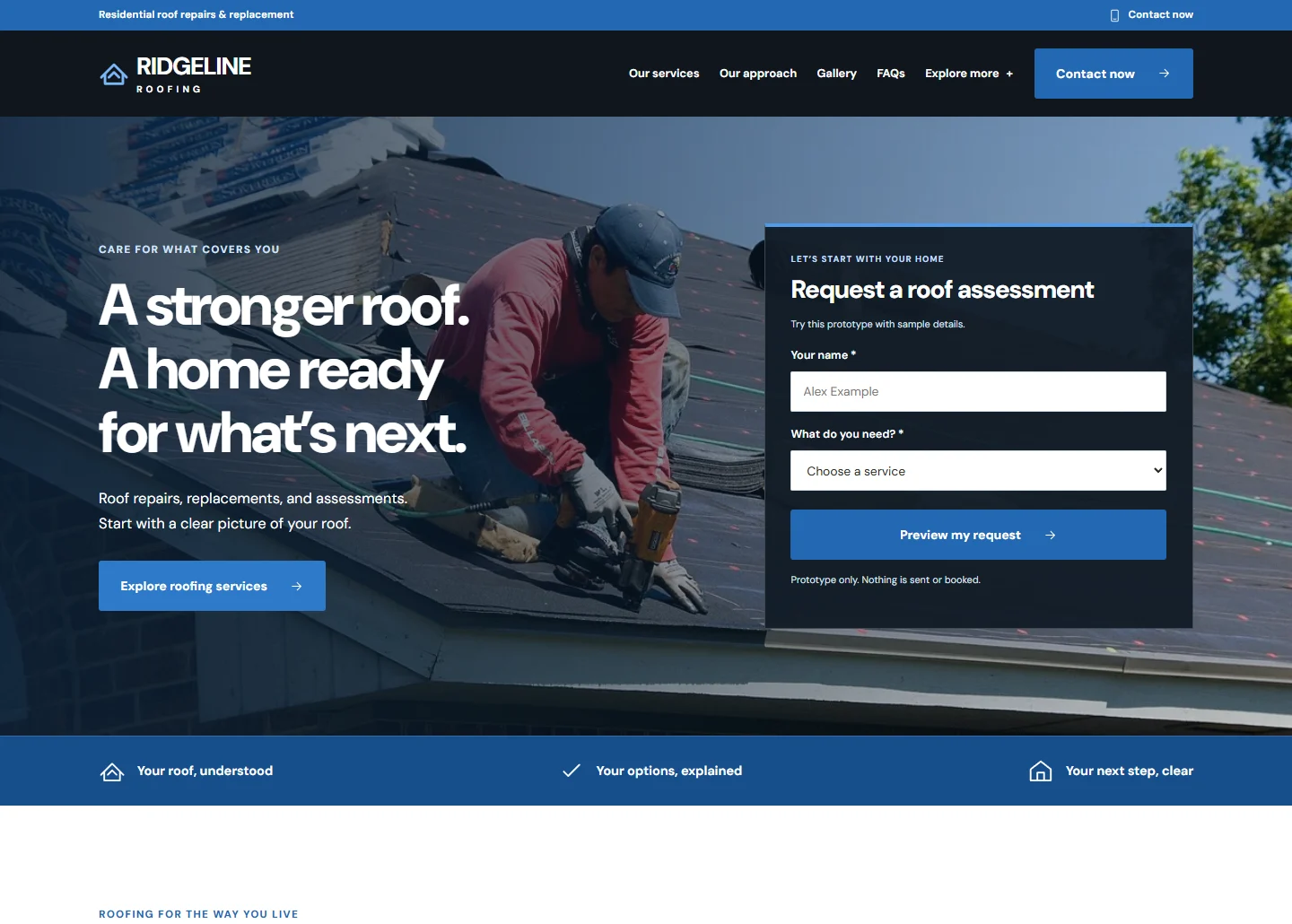
A roofer fastening asphalt shingles over the roof underlayment

An everyday situation. Shown from start to finish.

See what happens
while you’re working.

Four short animated stories.
Real situations. Clear next steps.

An electrical worker attending to wiring
An electrician’s afternoon 01 / 06

YOUR WEBSITE

A customer needs an electrician.

Jamie’s kitchen outlets have stopped working. Your service page explains repairs and puts contact within reach.

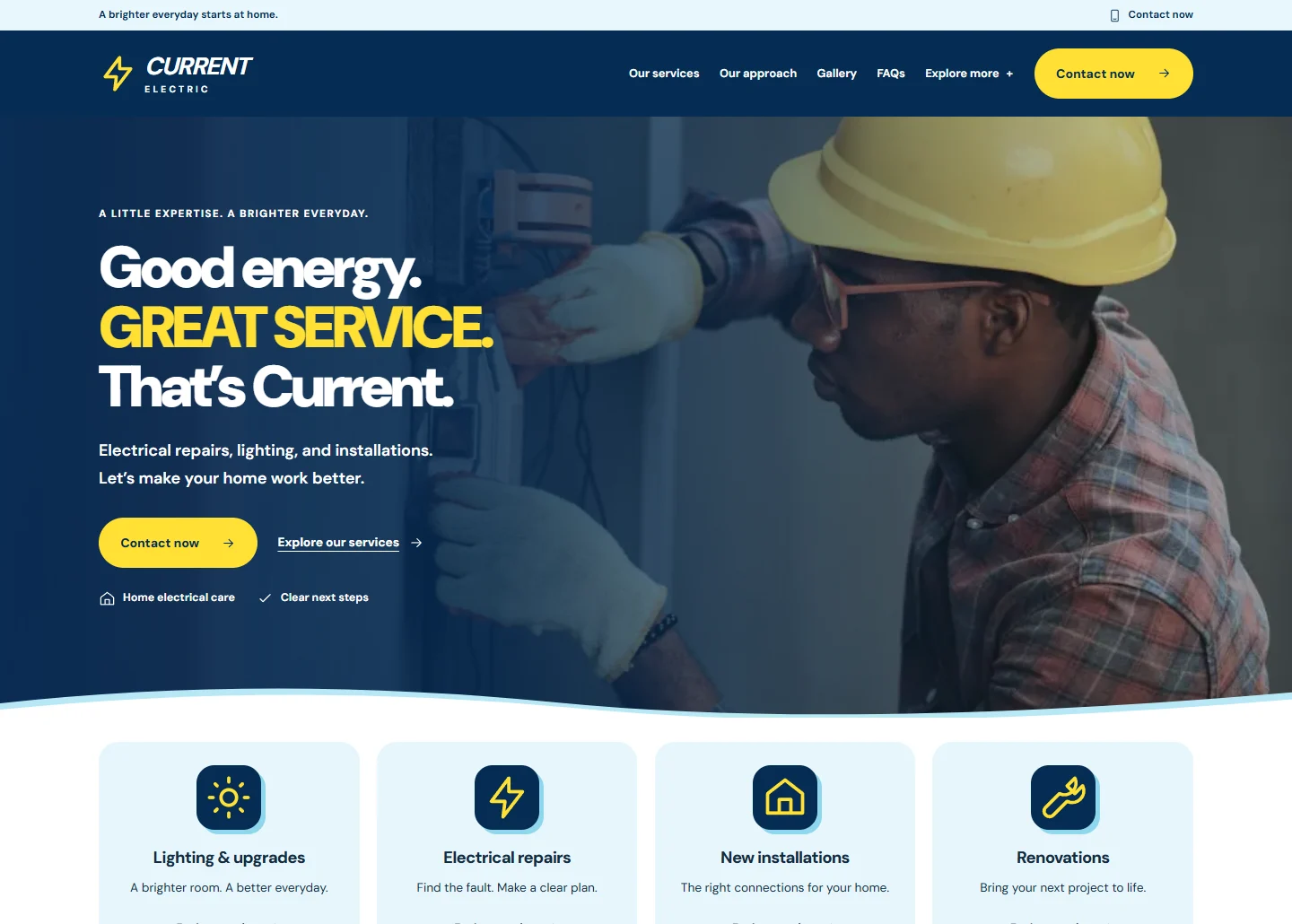
Current Electric
ELECTRICAL REPAIRS

Outlets stopped working?

Tell us what changed. We’ll discuss the next step.

ServiceRepairs & fault finding
Contact now ↗

Illustrative animation · No sound needed · Messages and timing tailored during setup

What’s included
Read the walkthroughs

The missed call: An electrician’s afternoon

  1. A customer needs an electrician. Jamie reads the electrical repairs page and chooses Contact now.
  2. The phone rings. Your hands are full. Jamie calls while you are working. The call is missed.
  3. They hear back without waiting for you. Automatic reply: Thanks for calling Current Electric. Sorry we missed you. What can we help with? Jamie: The kitchen outlets stopped working this morning. Can someone take a look?
  4. A useful conversation is waiting. Your inbox contains Jamie’s reply and the kitchen outlet problem. It is ready for you to respond.
  5. You handle the advice and the arrangements. You: Thanks, Jamie. I’ll call you to discuss the issue and the next step. Jamie: Thanks. I’m available this afternoon. The owner confirms availability, assessment, and costs.
  6. Less phone tag. A clearer starting point. The customer is acknowledged, the problem is described, and you choose the next step. Rules and handoff are agreed during setup.

Why it helps: A customer to call back. A useful description of the job.

The roof inquiry: A homeowner after the rain

  1. A damp patch sends Alex looking for help. Alex finds the roof-repair page and selects Request an assessment after noticing a damp patch.
  2. A few details. No roofing vocabulary needed. Alex Example selects Roof repair and writes: A damp patch above the upstairs window after rain. The website receives the request.
  3. The request gets an acknowledgment. Automatic reply: Thanks, Alex. We’ve received your roof-repair request. When did you first notice the damp patch?
  4. Alex adds the part you would ask anyway. Alex replies: After Monday’s rain. We haven’t noticed a leak there before. This background is added to the inquiry.
  5. Now you can arrange the right next step. The team reviews Alex’s inquiry and confirms access, assessment charges, and timing directly. Automation does not confirm an appointment.
  6. A prepared conversation, before the visit. The customer has selected a service and supplied useful details. Your team handles the assessment and recommendation.

Why it helps: The request arrives with details your team can use.

After the job: A plumbing job, finished

  1. The repair is done. Start with that. Your team marks Sam’s sink repair complete. This is the agreed starting point for a review invitation.
  2. A thank-you, with a simple invitation. Review invitation: Thanks for choosing Clearflow, Sam. Would you share an honest review of your experience? A direct review link follows.
  3. One link to the review page. Sam can choose any rating. Feedback is optional, and invitations do not filter customers by satisfaction.
  4. If needed, one useful nudge. An optional reminder follows under the agreed timing and stopping rules, inviting Sam to share their experience.
  5. A reply or opt-out stops the sequence. A reply or opt-out stops automated reminders under the agreed rules. Your team handles personal replies.
  6. Good work. A consistent way to ask. The invitation uses a direct link and agreed timing. It supports asking without promising reviews or particular ratings.

Why it helps: An easy, consistent way to invite honest feedback.

Getting your website: From your idea to launch

  1. Start with the business you already know. Share your business name, services, area, and a website example you like. No technical brief is required.
  2. Know what you’re getting before we build. We agree the page plan, content responsibilities, scope, costs, and terms together before building.
  3. Open your website. Click through it. You open the draft website, check the pages and contact flow, and request refinements before launch.
  4. Make the messages sound like you. You approve the message wording, timing, stopping rules, and where customer replies reach you.
  5. Follow a sample inquiry all the way through. We check the mobile pages, navigation, forms, sample inquiries, replies, and the agreed owner handoff.
  6. Go live when the details are right. After you approve the website, messages, and publishing details, launch follows the agreed plan. Ongoing responsibilities are confirmed.

Why it helps: You can review the website and the replies before anything goes live.

Give each service a clear home.

Someone looking for a roof repair should be able to find a page about roof repairs. We organize service content around the questions and next steps relevant to that work, with headings that make the page easy to scan.

Make the important details accurate.

Page titles and descriptions help explain each page. Business information and structured data use verified details, and the site connects related pages so visitors can move from a service to a question or contact option naturally.

Start with a sound foundation.

This covers the website itself. It does not promise a search position or include unconfirmed advertising, backlink campaigns, or ongoing SEO retainers. We discuss any work beyond the package separately so you understand what is included.

Match each page to a useful customer question.

Start with the services you actually offer and the places you actually serve. A service page should explain the work, answer common questions, and lead to a relevant contact option. We use verified business information and connect related pages. Search performance after publication helps identify which topics need stronger explanations or further work; adding repeated city names is not a substitute for useful content.

The rest of your package.

Your questions,
answered.

What does on-page SEO include?

It includes unique titles and descriptions, a clear heading structure, useful service content, descriptive internal links, image descriptions, and structured information based on verified business details. Canonical URLs and a sitemap help search engines understand the pages you want indexed.

How is on-page SEO different from ongoing local SEO?

On-page SEO improves the website itself. Ongoing local SEO may also involve maintaining a Google Business Profile, earning genuine reviews and relevant links, publishing new material, and reviewing search performance. Those activities are not automatically included as an ongoing retainer.

How quickly will a new website appear in search?

Search engines need to discover and assess the published pages, and there is no guaranteed indexing or ranking timetable. Competition, relevance, site history, and other signals affect visibility. Search Console can help a verified owner check indexing and learn which searches bring visitors.

Your business deserves
a website that feels right.

Tell us about your business. We’ll take it from there.

Let’s talk about your website